The mattress buying guide: how to choose a mattress in the UK

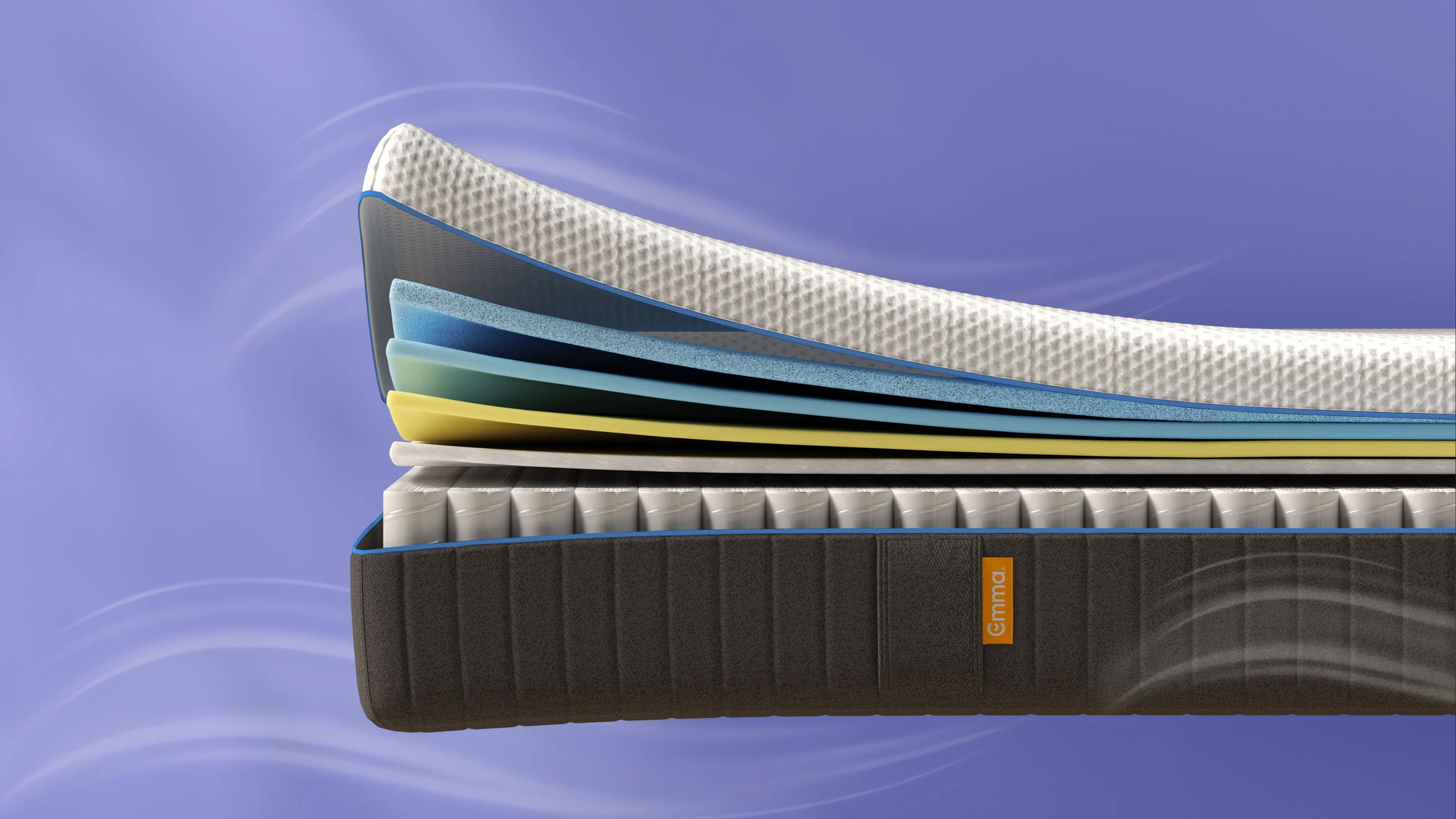
Buying a mattress means making one decision that you'll sleep on for years, usually without being able to try it for more than a few minutes first. This mattress buying guide breaks that decision into six smaller ones, in the order that narrows the field fastest: size, construction, firmness, budget, the small print, and where to buy. Each section links to deeper guides, so you can go as far into any question as you need.
- Choose your size and construction first; firmness comes second.
- Firmness labels vary between brands, so treat them as a starting point rather than a promise.
- Trial and guarantee terms vary far more than comfort, and they decide what happens if you get it wrong.
- A mattress in a box is a delivery method, not a quality tier.
Six decisions that narrow the field
Most mattress guides start with firmness, but firmness is easier to judge once you've ruled out the wrong sizes and constructions. Work through these in order:
- Size, which is fixed by your bed frame and your room.
- Construction: springs, foam or a hybrid of the two.
- Firmness, which depends on how you sleep and what you weigh.
- Budget, set in the size you actually need.
- The small print on trials, guarantees and returns.
- Where to buy, and whether you want it boxed or delivered flat.
Choose your size first
Size is usually decided for you by your bed frame, so measure it before you shop. UK sizes differ from European ones, which are often slightly longer and wider, so a mattress sold in EU sizes may not fit a UK frame.
| Size | Dimensions | Suits |
|---|---|---|
| Single | 90cm x 190cm | One adult or a child |
| Small double | 120cm x 190cm | One adult with room to spread, or a guest room |
| Double | 135cm x 190cm | Two adults, snugly |
| King | 150cm x 200cm | Two adults with more room |
| Super king | 180cm x 200cm | Two adults who want the most space |
If you share a bed, a king gives each person more width than a double for a modest step up in price. Our mattress sizes guide covers every UK size, including small singles, emperors and the less common sizes, with the mattresses available in each.
Mattress types explained
Construction decides how a mattress feels and how long it lasts, far more than the brand name does. The main types are:
- Open coil: a single connected spring unit. Cheap and light, and good for guest rooms, but movement travels across the bed.
- Pocket springs: individually wrapped springs that respond to your shape and limit partner disturbance. The traditional choice for everyday beds.
- Memory foam: foam that moulds slowly to your body, spreading pressure and absorbing movement, though it can sleep warm.
- Foam: layers of standard or reflex foam, from basic guest mattresses to more substantial all-foam designs.
- Hybrid: pocket springs under foam comfort layers, aiming for spring support with foam's pressure relief.
- Latex: a buoyant, responsive material that pushes back more quickly than memory foam and tends to sleep cooler.
If you're torn between two, our comparisons set them side by side: foam vs spring, hybrid vs memory foam and open coil vs pocket sprung.
Firmness: how you sleep and what you weigh
Firmness is the most personal part of the decision, and there's no shared standard for it. One brand's medium firm can feel like another's firm, so treat the label as a starting point. Medium firm is the most common place to start, and it's the firmness most often associated with back comfort in research.
How you sleep shifts that starting point:
- Side sleepers need give at the shoulder and hip, so a medium or zoned medium firm usually suits.
- Back sleepers tend to do best between medium and medium firm, which supports the lower back without letting the hips sag.
- Front sleepers need firmer support to stop the hips sinking and the spine arching.
- Combination sleepers usually get on best with a responsive medium firm that makes turning over easy.
Your weight matters too. Heavier sleepers press further into a mattress, so a firm label can feel closer to medium firm. Our guide to the best mattress for heavy people covers depth and support in detail. If back pain is part of the reason you're buying, the best mattress for back pain guide sets out what the research says.
What to spend
Prices vary so much by size that it's worth setting your budget in the size you need. As a guide, here's where UK double prices sit for each construction today:
| Construction | Middle price | Middle half of the market |
|---|---|---|
| Open coil | £244 | £199 to £319 |
| Memory foam | £339 | £252 to £449 |
| Foam | £438 | £215 to £1,199 |
| Latex | £569 | £309 to £1,239 |
| Hybrid | £649 | £437 to £901 |
| Pocket spring | £780 | £493 to £1,509 |
Spending more usually buys deeper comfort layers, more springs, natural fillings or hand finishing, rather than a completely different kind of support. It's quite possible to get a good everyday mattress for under £500 in a double, and our best budget mattress guide shows where that money goes furthest. Sales run for much of the year, so compare today's price across retailers rather than trusting a countdown.
Trials, guarantees and returns: the small print
This is where most buying regret comes from, and where mattresses differ most. Before you buy, check these points:
- Whose trial it is. A manufacturer's trial and a retailer's returns window aren't the same thing, and they can differ in length and conditions.
- How long it runs, and whether you must keep the mattress for a minimum period before returning it. Trials range from none at all to a full year.
- What a return gets you: a refund, or only an exchange. Some returns carry a collection charge.
- What condition the mattress must be in. Many brands expect you to have used a protector from the start.
- What the guarantee covers. Most cover manufacturing faults and body impressions deeper than a set measurement, not the gradual softening every mattress goes through.
- What the guarantee expects of your bed base, since a sagging base or wide gaps between slats can affect a claim.
Your body can take several weeks to adjust to a new mattress, so a long trial with straightforward returns is often worth more than a small saving.
Boxed or delivered flat
A mattress in a box is compressed and rolled for delivery, then expands at home. Boxed mattresses now include deep hybrids with pocket springs as well as foam, so the box tells you about delivery rather than quality. They're easier to get up narrow stairs and usually come with long trials.
Flat delivery suits you if you want to try a mattress in a showroom first, prefer natural fillings, or want a very deep or turnable mattress. Our guide to buying a mattress in a box covers what to expect from delivery to returns.
Buying for two
Sharing a bed adds two questions: how much you feel each other move, and whether you need the same firmness. Pocket springs and memory foam both limit movement travelling across the bed, while open coil springs pass it on. Microspring layers in hybrids help too.
If you and your partner need different firmness, a medium firm is the usual compromise, but it isn't the only option. Some brands sell zip-and-link mattresses, two singles joined into one bed so each side can have its own feel. Some traditional makers also offer dual-tension mattresses, with a different spring tension on each side. Size matters as well: a king gives each of you 75cm of width, against 67.5cm in a double.
Getting the most from your trial
A trial only helps if you use it properly. Sleep on the new mattress every night rather than switching back and forth, and give it several weeks, since your body needs time to adjust to a different feel. Keep a note of the delivery date so you know when the trial ends, and use a protector from the first night so the mattress stays in returnable condition.
If it still isn't right after a few weeks, contact the brand or retailer before the trial ends. Some will suggest a topper or an exchange before a refund, so it helps to know what you want before you call.
Looking after your mattress
A little care makes any mattress last longer. Rotate it head to foot every few months, more often in the first year, so it wears evenly; turn it over only if the maker says it's double-sided. Use a washable protector to keep it clean. Make sure the base is sound, too, because slats that bow or a tired divan will wear a new mattress out from underneath.
When to replace your mattress
There's no fixed lifespan, because it depends on the construction and how much use a mattress gets. The signs are more useful than the age. Look for a dip where you sleep that's visible when you strip the bed, or springs you can feel through the surface. Edges that collapse when you sit on them, and waking stiff after a night that should have been restful, point the same way. If two or more of those sound familiar, a replacement will usually do more for you than a topper.
When you do replace it, check whether the retailer offers to take the old one away, since many charge a fee for removal. Otherwise your local council can usually collect it or tell you where to take it for recycling.
Which brand?
Brand names matter less than the construction and terms of the specific mattress, but some brands consistently offer longer trials, longer guarantees or better value than others. Our top 10 mattress brands guide compares the UK's best-known names side by side, each with the mattress we'd point most buyers to first. To compare two specific brands, see our mattress comparisons.
How we compare mattresses
We don't test mattresses by sleeping on them. We compare specifications, construction, trial and guarantee terms and prices across the UK market, alongside verified owner reviews where they exist. You can read more about how we assess mattresses and how we make money.
The Mattress Unboxed verdict
Choose on construction and terms first, and treat the firmness label as a starting point rather than a promise. A zoned medium-firm hybrid or pocket-sprung mattress suits most people, with side sleepers moving softer and front or heavier sleepers moving firmer. Then let the small print decide between close options, because a long trial with easy returns is the only way to know for sure how a mattress suits you.
Compare live mattress prices or start with the guide that fits your situation above.
Frequently asked questions
Mattress buying questions answered.
What should I look for when buying a mattress?
Start with size and construction, then firmness based on how you sleep and what you weigh. Set your budget in the size you need, and check the trial, returns and guarantee terms before you buy, since they vary more than comfort does.
How long should a mattress last?
It depends on the construction and how much use it gets. Deeper pocket-sprung and hybrid mattresses tend to last longer than thin foam or open coil ones. A dip where you sleep, springs you can feel, or waking stiff are signs it's time to replace it.
What is the best type of mattress?
There isn't one best type for everyone. Pocket springs and hybrids suit most people and sleep cooler than memory foam, while memory foam spreads pressure and absorbs movement well. Choose on how you sleep and whether you run warm.
Is it better to buy a mattress online or in store?
Both have advantages. Buying online usually gets you a longer trial and a boxed delivery, while a showroom lets you try a mattress first. Whichever you choose, check whose returns terms apply.
How do I know what firmness I need?
Use your sleeping position and weight as a guide. Side sleepers usually suit medium, back sleepers medium to medium firm, and front or heavier sleepers firm. Firmness labels vary between brands, so a long trial is the best way to be sure.