Best mattress for back pain (UK)

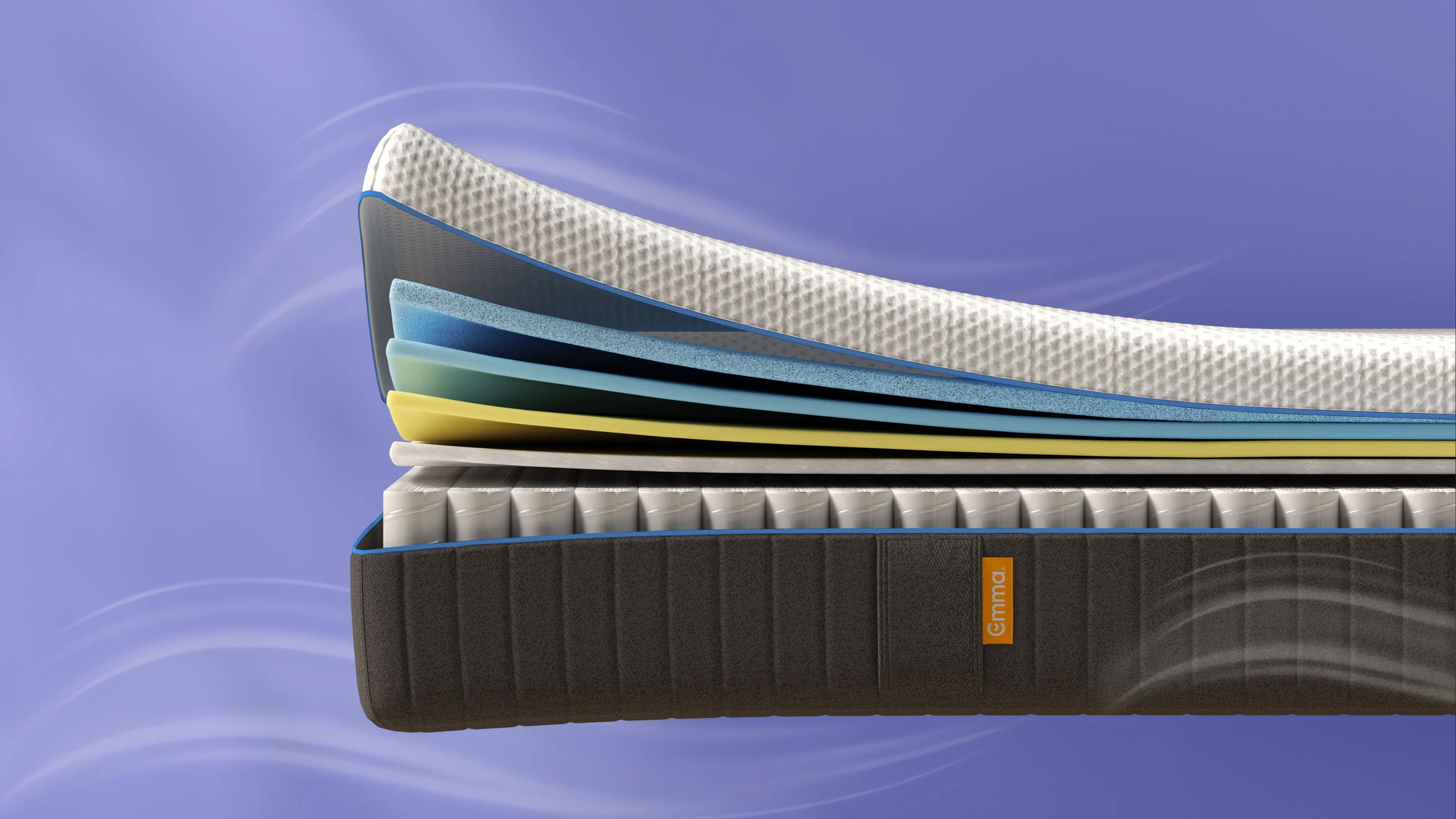
If your back aches in the morning, someone has probably told you to buy a firmer mattress. The evidence points the other way: in the best-known trial on the subject, people with chronic lower back pain did better on a medium-firm mattress than on a firm one. So the best mattress for back pain is rarely the hardest one you can find. What matters more is how well it supports the curve of your lower back, and how easily you can send it back if it doesn't.
- In a large randomised trial, people with chronic lower back pain reported better results on medium-firm mattresses than on firm ones.
- Firmness labels aren't standardised between brands, so compare construction and zoned support rather than the word on the label.
- Your weight and sleeping position both shift the firmness that will suit you.
- A long trial with easy returns is worth more than any firmness rating, because back comfort takes weeks to judge.
- Pain that persists or gets worse is a question for your GP, not a new mattress.
What the research says about mattresses and back pain
The most cited study is a randomised, double-blind trial published in The Lancet in 2003. Researchers gave 313 adults with chronic, non-specific lower back pain either a firm or a medium-firm mattress, without telling them which, and assessed them again after 90 days. The medium-firm group reported better outcomes for pain while lying in bed, pain on getting up and back-related disability (Kovacs et al., The Lancet, 2003).
A 2021 systematic review of 39 studies came to a similar view, associating medium-firm mattresses with better comfort, sleep quality and spinal alignment. The same authors found that claims of therapeutic benefit made for so-called orthopaedic mattresses aren't supported by enough evidence (Caggiari et al., Journal of Orthopaedics and Traumatology, 2021). That's why our orthopaedic mattresses guide reads the label as a firmness signal rather than a medical one.
Two caveats apply. These studies looked at non-specific lower back pain, not injuries or conditions such as sciatica, and a mattress isn't a treatment for either. The NHS says most back pain improves within a few weeks. If yours hasn't after a few weeks of treating it at home, it advises seeing a GP (NHS).
Why firm doesn't mean the same thing everywhere
There's no shared standard for firmness labels, so one brand's medium firm can feel like another's firm. The Lancet trial used a formal European scale; the label on a mattress uses whichever scale its maker chose.
Your body changes the reading too. A heavier sleeper sinks further into the same mattress and feels it as softer, while a lighter sleeper stays nearer the surface and feels it as firmer. That makes construction a more reliable guide than the label. These features help most:
- Zoned support, meaning springs or foam that are firmer under the hips and softer at the shoulders, so the spine stays level whichever way you lie.
- A comfort layer that suits your position: deep enough to cushion the shoulder if you sleep on your side, thinner if you sleep on your back or front.
- Pocket springs rather than a single connected spring unit, because each spring responds to your shape on its own.
- Enough depth for your weight, since a thin mattress reaches its support core sooner.
Our firm vs medium firm comparison sets the two feels side by side, and the medium firm range is where most of the picks below sit.
The best mattresses for back pain
We chose these by comparing specifications, construction, trial terms and price position across the UK market, favouring medium-firm and firm mattresses with zoned or individually responsive support. We haven't slept on them. The picks are based on each manufacturer's or retailer's specification, verified owner reviews where they exist, and how each one compares with similar mattresses. You can read more about how we assess mattresses.
| Mattress | Construction | Firmness | Depth | Trial |
|---|---|---|---|---|
| Simba Hybrid | Hybrid, nine-zone base | Medium firm | 25cm | 200 nights |
| Emma Original Pro | Hybrid, seven-zone springs | Medium firm | 27cm | 200 nights |
| Silentnight UltraGel 1400 | Pocket springs with gel layer | Firm | 29cm | 60 nights |
| Millbrook Wool Luxury 4000 | Pocket springs, wool and cotton, seven zones | Medium firm | 28cm | Varies by retailer |
| Emma Original Lite | Hybrid, three-zone springs | Medium firm | 22cm | 200 nights |
| Tempur Ease 20cm | Memory foam | Medium to firm | 20cm | 100 nights |
Simba Hybrid: the zoned all-rounder
The Simba Hybrid combines a nine-zone base with a layer of individually compressing microsprings, which means firmer support under the hips and less movement travelling across from a partner. It's rated medium firm and 25cm deep, squarely in the range the research favours, and a graphite-infused foam layer helps it shed heat.
Across owner reviews on Simba's site and retailer listings, comfort and back support are the most praised qualities. The most common adjustment note is that it can feel firmer than expected for the first few weeks, which the 200-night trial gives you time to judge. Lighter sleepers may find it a little too firm, and committed front sleepers may want more pushback. It sits at the upper end of the mid-range, with a 10-year guarantee. See the Simba Hybrid
Emma Original Pro: seven support zones at a mid-range price
Emma divides the Original Pro's pocket springs into seven zones, so your hips and shoulders get different levels of give rather than one uniform push. It's rated medium firm at 27cm deep, and the graphite-infused foam should run cooler than an all-foam design. Emma offers a 200-night trial with a 10-year guarantee, and the cover comes off to wash at 40°C.
If you like a distinctly firm surface, it may feel a little forgiving, and fans of a springs-only feel will notice the foam. See the Emma Original Pro
Silentnight UltraGel 1400: firm support with some give
Silentnight rates this one firm. Its 1,400 pocket springs adjust to your weight individually, so a heavier hip and a lighter shoulder each meet the right resistance. An UltraGel layer on top adds a touch of cushioning without the slow, stuck feeling of some foams. At 29cm it's the deepest pick here.
Silentnight's own site lists a 60-night trial and a 5-year guarantee, both shorter than the boxed brands above. It suits back and front sleepers who want a firmer bed; lighter side sleepers may find it doesn't let the shoulder and hip settle enough. See the Silentnight UltraGel 1400
Millbrook Wool Luxury 4000: natural fillings over seven zones
If you'd rather avoid foam, the Millbrook Wool Luxury 4000 layers wool and cotton over a 4,000-spring unit that varies its firmness across seven zones. The natural fillings help regulate temperature, so it suits warm sleepers, and reinforced edges mean you can sit or sleep near the side without feeling you'll roll off. It's medium firm, 28cm deep and hand-tufted, so expect a slightly dimpled, traditional surface.
Owner reviews on Mattress Online mention comfortable sleep and good material quality, with a recurring note that it feels firmer than expected. It's heavy to turn, though the handles help, and trial terms depend on where you buy, so check before you order. See the Millbrook Wool Luxury 4000
Emma Original Lite: zoned springs on a budget
The Original Lite brings a three-zone pocket spring core down to a budget price, with firmer support where you carry more weight and a softer feel at the shoulders. A foam edge helps the sides feel stable, and it's rated medium firm. At 22cm it's slimmer than most picks here. Emma still backs it with a 200-night trial and a 10-year guarantee, though, so there's little risk in trying it.
Lightweight side sleepers may find it slightly firm at the shoulder, and it won't feel as substantial as the deeper hybrids. See the Emma Original Lite
Tempur Ease 20cm: for memory foam loyalists
Some people with aching backs simply prefer the close, moulded feel of memory foam, and Tempur is the name most associated with it. Its Adapt foam shapes to your body and responds to temperature, spreading pressure across the hips and shoulders. An 8cm motion-absorbing layer underneath makes it a sensible choice for couples. Tempur offers a 100-night trial and a 10-year guarantee.
Hot sleepers should think twice: owner reviews mention warmth, a known trait of dense memory foam. If you like a springy, responsive surface, the slow sink will feel enveloping, and at 20cm it's shallower than the hybrids here. It sits at the upper end of the mid-range. See the Tempur Ease 20cm
Matching support to how you sleep
Back sleepers tend to do best between medium and medium firm, where the surface fills the curve of the lower back without letting the hips sag. Our back sleeping guide goes into that lumbar support in more detail.
Side sleepers need more give at the shoulder and hip, so a firm mattress can create pressure even while it holds the spine straight. If you sleep on your side and your back aches, start with a zoned medium firm or a medium with a deeper comfort layer. The side sleeping guide explains why.
Front sleeping puts the most strain on the lower back, because the hips sink and the spine arches. Front sleepers are the one group for whom firmer genuinely helps, which the stomach sleeping guide explains.
Heavier or lighter than average
Weight shifts everything above. Heavier sleepers press deeper, so a medium-firm mattress can behave more like a medium. For them, a firm, deep build with a strong spring unit often gives the level spine the research associates with medium-firm. Our guide to the best mattress for heavy people covers depth, spring counts and the bed base.
Lighter sleepers stay nearer the surface and can find a medium firm hard at the pressure points, so a medium is often the better choice. If budget is the main constraint, our best budget mattress guide compares what you get under £500 in a double.
The trial matters more when your back hurts
Your body takes time to adjust to a new mattress, and a sore back makes the first few nights a poor guide. That's why the trial deserves as much attention as the firmness rating. Before you buy, check three things:
- Whether the trial is the manufacturer's own or a retailer's returns window, since the two can differ in length and conditions.
- Whether you need to keep the mattress for a minimum period before returning it, and whether you must use a protector.
- Whether a return means a refund or only an exchange, and who pays for collection.
The boxed brands here offer the longest trials, which is part of their appeal if you're unsure. For the rest of the buying picture, from sizes to guarantees, start with our mattress buying guide.
The Mattress Unboxed verdict
For most people with an aching back, a zoned medium-firm hybrid is the sensible place to start. The Simba Hybrid is the strongest all-rounder here, and the Emma Original Pro offers similar zoning for less. Firm is the right call for heavier and front sleepers rather than a rule for everyone, and the Silentnight UltraGel 1400 serves that group well. Whichever you choose, buy on the trial as much as the label, because only a few weeks at home will tell you how your back responds.
Compare medium firm mattresses or see live prices on the picks above.
Frequently asked questions
Choosing a mattress when your back hurts.
Is a firm or medium mattress better for back pain?
The research favours medium-firm. In a randomised trial of people with chronic lower back pain, those given medium-firm mattresses reported better results than those on firm ones. Firmer can suit heavier and front sleepers, but it isn't automatically better for backs.
Can a mattress cause back pain?
A mattress that no longer supports you, for example one that sags at the hips, can leave you stiff in the morning. Stiffness that eases once you're up and moving often points to the mattress; pain that lasts through the day or gets worse is worth discussing with your GP.
How long should I give a new mattress before judging it?
Most brands suggest several weeks, because your body needs time to adjust to a different feel. That's why a long trial with straightforward returns matters so much when you're buying for back comfort.
Are orthopaedic mattresses better for back pain?
Orthopaedic is a marketing term rather than a medical standard, and it usually just means a firm feel. A 2021 review found that therapeutic claims for orthopaedic mattresses aren't supported by enough evidence, so judge them on firmness and construction.
What mattress is best for lower back pain if I sleep on my side?
Side sleepers need give at the shoulder and hip as well as support at the waist, so a zoned medium-firm or a medium with a deeper comfort layer is usually a better starting point than a firm mattress. Lighter side sleepers often do best on a medium.